
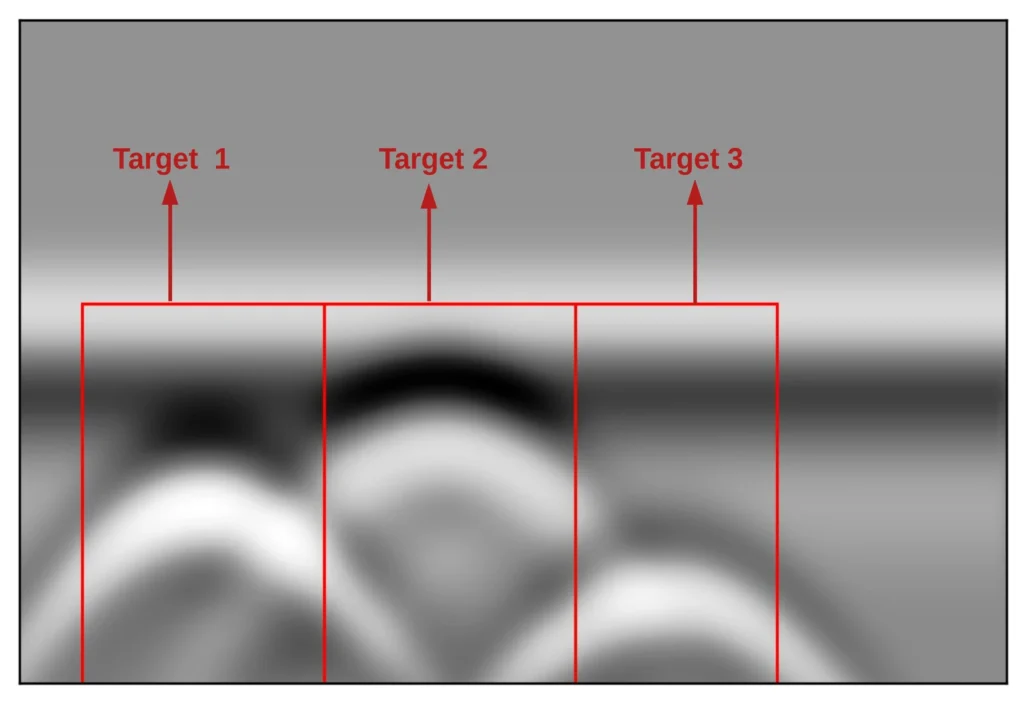
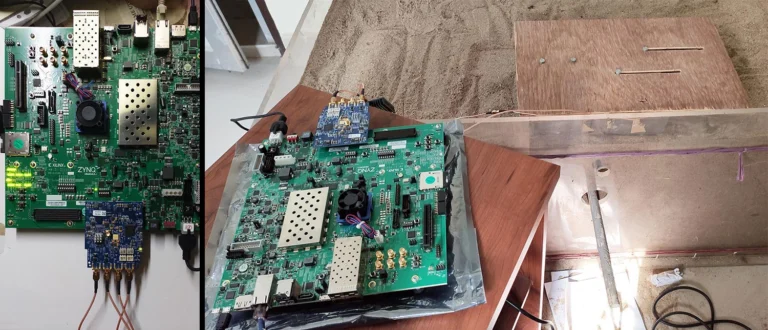
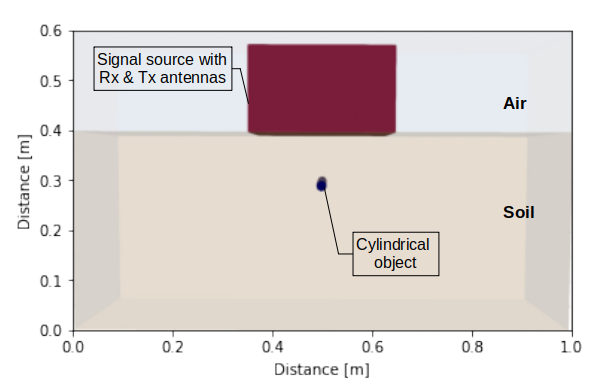
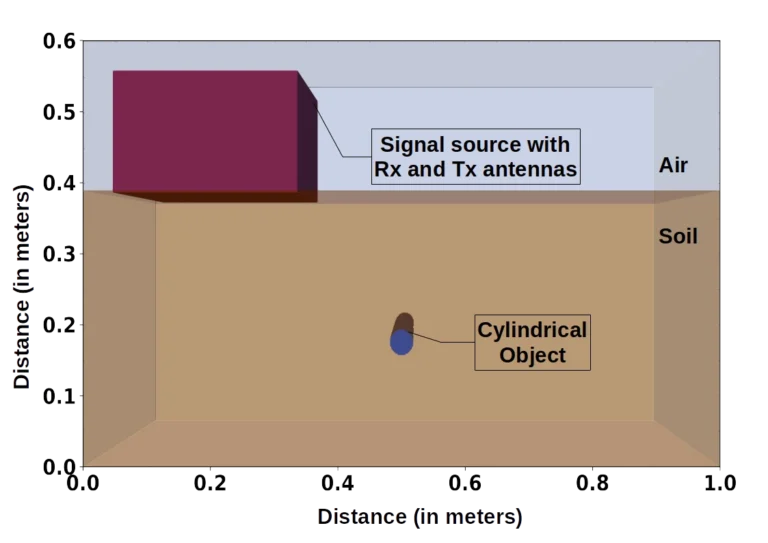
Deep learning is the thread that ties the GPR work together. Convolutional neural networks (CNNs) read B-scan images; fully connected networks (ANNs) read A-scans and their frequency spectra. Training data comes from finite-difference time-domain (FDTD) simulations in gprMax, accelerated on NVIDIA GPUs, and from experiments with the prototype radar.
These models classify soil types, estimate soil moisture, and predict the size, shape and material of buried objects. The next step is to run them on the FPGA platform itself, so the radar can interpret what it sees in real time.
Articles
 Size estimation of underground targets from GPR frequency spectra: A deep learning approach
21 min read
Size estimation of underground targets from GPR frequency spectra: A deep learning approach
21 min read
 Estimation of soil moisture from GPR data using Artificial Neural Networks
10 min read
Estimation of soil moisture from GPR data using Artificial Neural Networks
10 min read
 A CNN model for predicting size of buried objects from GPR B-Scans
26 min read
A CNN model for predicting size of buried objects from GPR B-Scans
26 min read
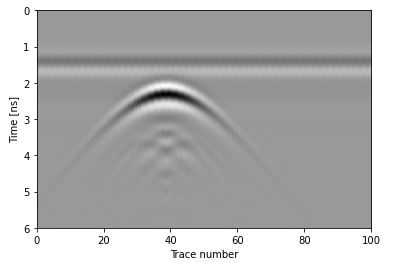 Classification of Soil Types from GPR B-Scans using Deep Learning Techniques
12 min read
Classification of Soil Types from GPR B-Scans using Deep Learning Techniques
12 min read
Publications
Size estimation of underground targets from GPR frequency spectra: A deep learning approach
Journal of Applied Geophysics, vol. 213, 105009
Automatic Material Classification of Targets from GPR Data using Artificial Neural Networks
2022 IEEE Silchar Subsection Conference (SILCON)
A CNN model for predicting size of buried objects from GPR B-Scans
Journal of Applied Geophysics, vol. 200, 104620
Estimation of soil moisture from GPR data using artificial neural networks
2021 IEEE International Conference on Technology, Research, and Innovation for Betterment of Society (TRIBES)
Artificial Neural Network based automatic classification of target shapes from GPR data
2021 IEEE International Conference on Computation System and Information Technology for Sustainable Solutions (CSITSS)
Classification of soil types from GPR B Scans using deep learning techniques
2021 6th IEEE International Conference on Recent Trends in Electronics, Information & Communication Technology (RTEICT 2021)