
About
Nairit Barkataki
He builds and studies ground penetrating radar, from the antennas and FPGA hardware to the deep-learning models that interpret what lies beneath the surface.
Nairit Barkataki is an Assistant Professor in the Department of Instrumentation & USIC at Gauhati University, Guwahati, India. His research sits where sensing hardware meets signal processing and artificial intelligence: ground penetrating radar (GPR), antennas and electromagnetics, FPGA-based instrumentation, and deep learning for scientific data.
He has worked on GPR since 2016. His PhD thesis at Gauhati University, Study and Implementation of Hardware Design and Signal Processing Strategies for Ground Penetrating Radar (2022), brought the two sides of the problem together: building the radar, and making sense of what it records. With his colleagues and students he has published neural-network models that estimate the size, shape and material of buried objects, and the moisture and type of the soil around them, in journals such as the Journal of Applied Geophysics.
He supervises PhD and MSc students in the department. The group’s projects now reach beyond radar into archaeology, mapping and medicine: wherever careful measurement and good signal processing can answer a real question.
Current work
These projects are under way. Results will appear on this site as they are published.
Radar instruments, built in-house
Research instruments the group can open up and change, instead of closed commercial units.
- Compact ultra-wideband antennas for GPR, designed, fabricated and measured in the lab
- A low-cost pulse generator and a high-sensitivity receiver
- FPGA platforms for high-speed data acquisition
- A wheeled robot that carries the radar across a site to collect field data
GPR signal processing and AI
Getting clean, quantitative answers out of radar data.
- Removing clutter and noise from B-scans, with classical filters and deep-learning models
- Detecting and fitting the hyperbolas that buried objects leave in B-scans
- Classifying the shape and material of targets from experimental A-scans and their spectra
- Detecting water in buried pipes, and voids below the surface
- Full waveform inversion, to recover the properties of the ground itself
Archaeology and heritage
Bringing instrumentation and data analysis to the archaeology of Assam.
- Archaeometallurgy of early iron smelting in Assam: chemical and mineral analysis (XRF, XRD, SEM-EDX and thermal analysis) of iron slags and ores from archaeological sites
- GPR surveys of heritage sites in Assam
- Deep learning to find archaeological features in GPR data, and to tell cultural objects from natural ones
In collaboration with archaeologist Dr. Manjil Hazarika, Cotton University
UAVs, LiDAR and 3D mapping
Seeing a site from the air, and its finds in three dimensions.
- UAVs built in the lab, carrying LiDAR to map archaeological sites and objects in 3D
- A low-cost turntable 3D scanner, using laser triangulation or photogrammetry, to digitise small finds such as figurines
Medical and biomedical engineering
Low-cost instruments and AI methods for problems in healthcare.
- A red-LED photobiomodulation therapy device, intended for oral mucositis in head-and-neck cancer patients (working prototype)
- Deep learning to segment organs in CT scans of head-and-neck cancer patients
- An in-house, research-grade EEG system, and methods for analysing brain signals to study emotion and cognitive load during online learning
- Machine learning on public cancer-genomics data
AI beyond radar
The same data-driven methods, applied to other questions from the region.
- Long-range forecasting of Indian summer monsoon rainfall from climate-model data
- Plant classification from leaf images, using image processing and deep learning
- Low-cost sensor networks for environmental monitoring
Research areas
All research →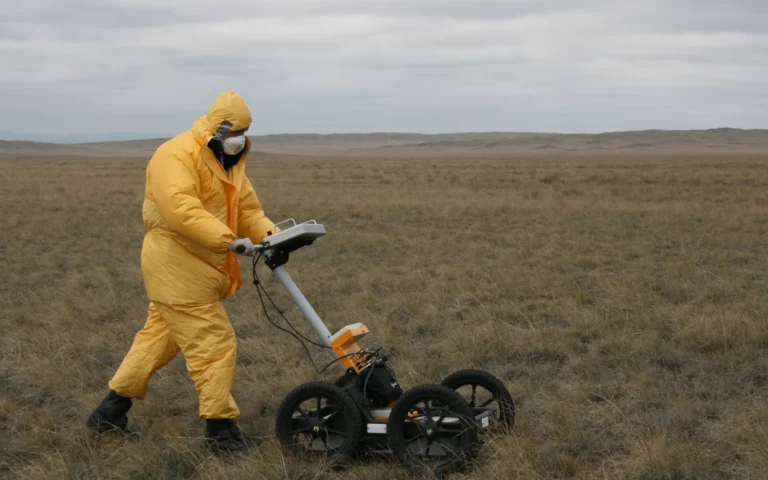 Ground Penetrating Radar
Signal processing and hardware design
From an FPGA-based prototype radar to the algorithms that read its echoes: the size, shape and material of buried objects, and the moisture and type of the soil around them.
7 publications · Explore →
Ground Penetrating Radar
Signal processing and hardware design
From an FPGA-based prototype radar to the algorithms that read its echoes: the size, shape and material of buried objects, and the moisture and type of the soil around them.
7 publications · Explore →
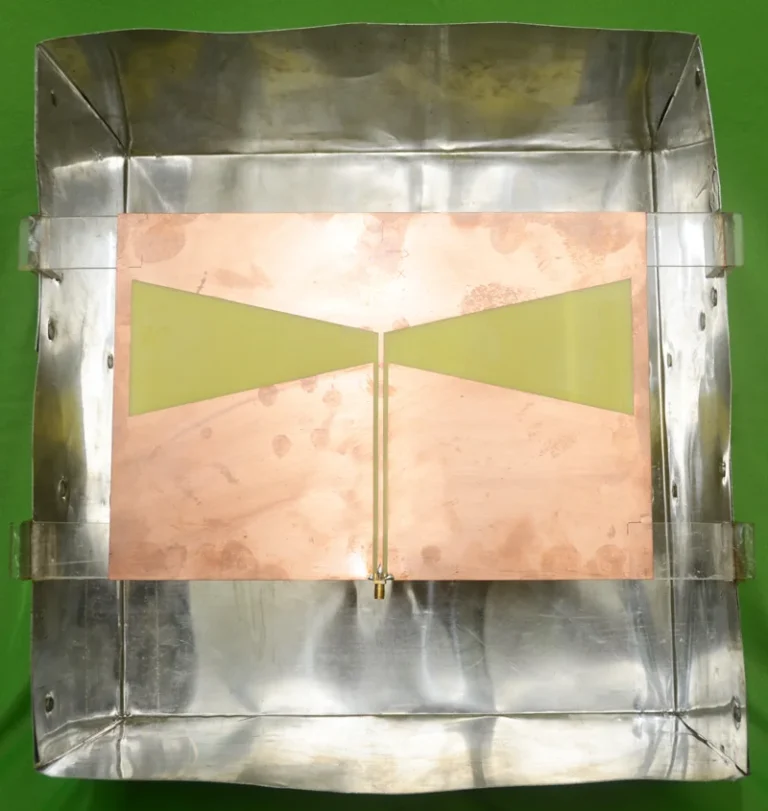 Electromagnetics
EM characterisation and antenna design
Designing, simulating and measuring antennas for GPR, where the antenna's centre frequency sets the balance between how deep the radar sees and how small a target it can resolve.
2 publications · Explore →
Electromagnetics
EM characterisation and antenna design
Designing, simulating and measuring antennas for GPR, where the antenna's centre frequency sets the balance between how deep the radar sees and how small a target it can resolve.
2 publications · Explore →
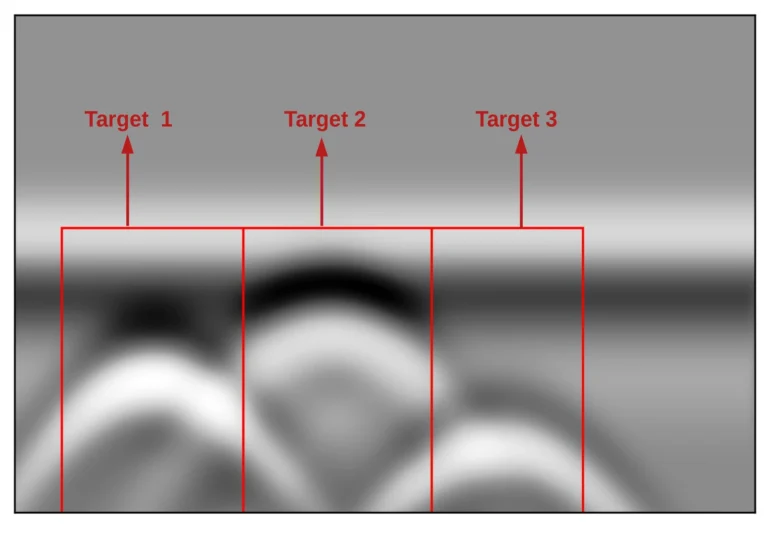 Artificial Intelligence
Deep learning on FPGAs and GPUs
Neural networks that turn raw radar data into measurements, trained on simulated and experimental GPR data, with the aim of running them in real time next to the radar.
6 publications · Explore →
Artificial Intelligence
Deep learning on FPGAs and GPUs
Neural networks that turn raw radar data into measurements, trained on simulated and experimental GPR data, with the aim of running them in real time next to the radar.
6 publications · Explore →
Ground Penetrating Radar — Photo: CTBTO Preparatory Commission, CC BY 2.0, via Wikimedia Commons (cropped)

Get in touch
For collaborations, student projects, field surveys or questions about the research.